

DeZi Webinar: Community Engagement
In Part 2 of the DeZi webinar "Cohorts & Community Engagement" organised by Wellcome Trust, Josefina Coloma (UC Berkeley / Sustainable Sciences Institute – Instituto de Ciencias Sostenibles) draws on more than 25 years of arbovirus research across Latin America to set out what meaningful community engagement actually looks like in the field.
Webinar Prof. Josefina Coloma (UC Berkeley / Sustainable Sciences Institute – Instituto de Ciencias Sostenibles).
Coloma traces a timeline that runs from early SEPA feasibility work in Nicaragua and the long-standing Pediatric Dengue Cohort Study, through the Camino Verde cluster-randomized trial, the DengueChat social and software platform, Zika-era mHealth adaptations, and into current implementation-science programs — including Proyecto Tariki in Peru and the Community Longitudinal Arbovirus Study in Ecuador that anchors this webinar series. The throughline is a rejection of "parachute science" in favor of partnerships built on trust, mutual benefit, and respect for local context.
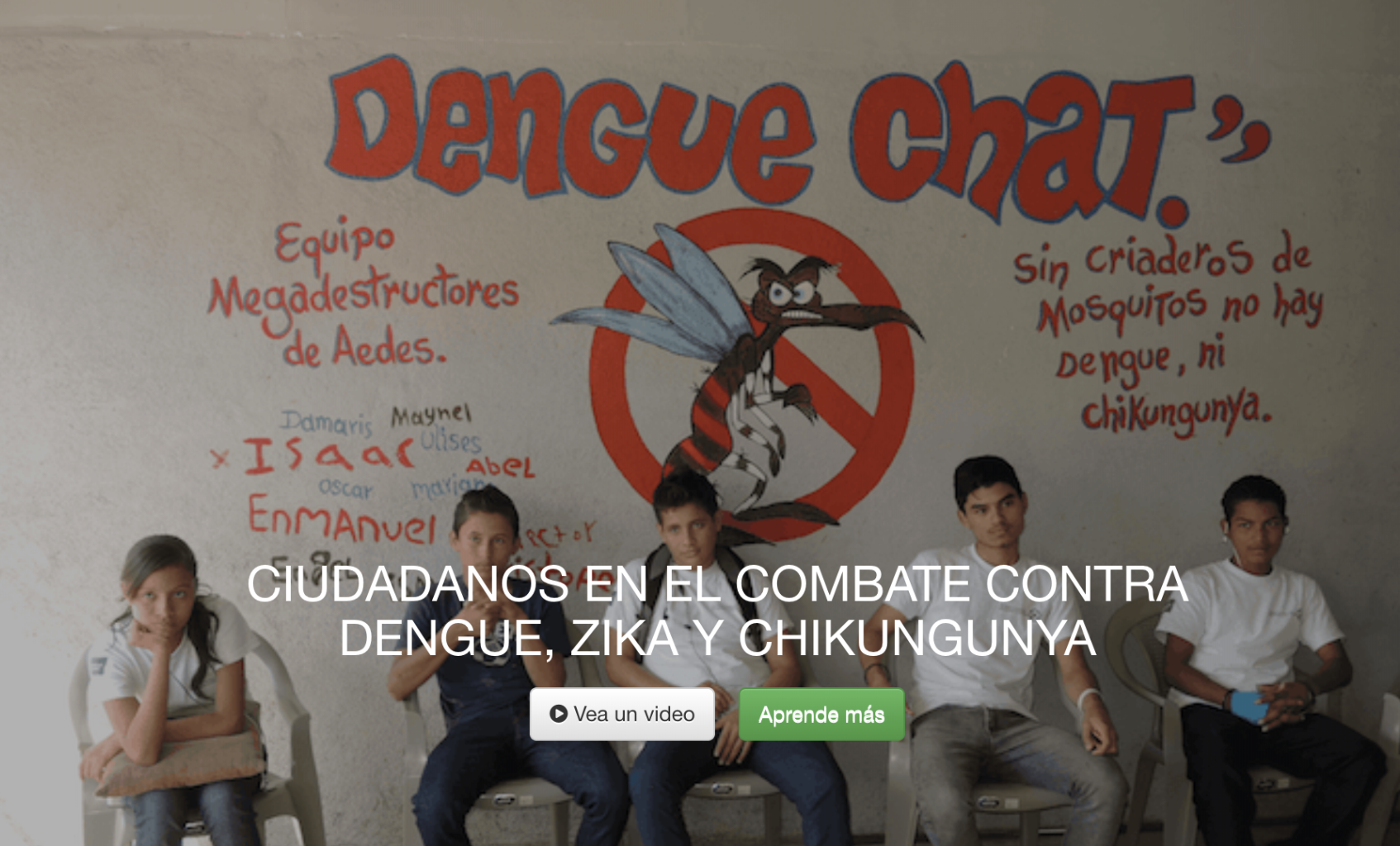
DengueChat empowers citizens directly affected by the spread of these diseases by allowing them to self-report both the identification and the elimination of the breeding sites of the mosquito that transmits the disease virus. Source.
The talk lays out a practical framework for researchers. Before fieldwork begins, teams should map the social, cultural, and political milieu of a community — its idiosyncrasies, existing organisations (health brigades, neighbourhood associations), political dynamics, and environmental determinants of risk. The theoretical foundation Coloma offers is a blend of Community-Based Participatory Research (CBPR) and Socializing Evidence for Participatory Action (SEPA), both rooted in Paulo Freire's Pedagogy of the Oppressed, which treats community members as active partners rather than subjects of study.
Among the lessons Coloma highlights: invest in baseline qualitative work (beyond-KAP, formative research, SES, environmental monitoring) before launching quantitative measurement; collaborate with medical anthropologists and sociologists to enrich study design; and engage communities by helping them tackle their own priority issues. She points to a DengueChat-linked sanitation effort in Managua that catalyzed street paving, more than 150 filled latrines, a neighborhood sewage and potable-water system, and 76 new bathrooms serving 400 people. Returning research findings to participants, she argues, is a baseline ethical obligation — not an optional courtesy — and a key driver of long-term trust. She closes with a clear thesis:
The strongest arbovirus research prioritizes individuals and families, respects community identities, anchors collaboration in trust and respect, and delivers tangible benefits that go well beyond "knowledge gained."