


DeZi Network at the PanArboNet Meeting 2027
The DeZi Network team will be presenting at the Pan-American Arbovirus Research Network (PanArboNet / Pan-Dengue Net) Meeting 2027 at the Centro de Convenções Rebouças in São Paulo, Brazil (19–22 April 2027). Abstract submissions close on 17 November 2026.

DeZi Network Keynote at FGV EMAp 15 Years: From reconstruction to intervention
On 10 November 2026, DeZi Network Lead PI Prof. Nuno R. Faria delivered a keynote lecture "From reconstruction to intervention: Quantitative methods for understanding and anticipating viral epidemics" presenting the DeZi Network at FGV EMAp’s 15th Anniversary conference in Rio de Janeiro.
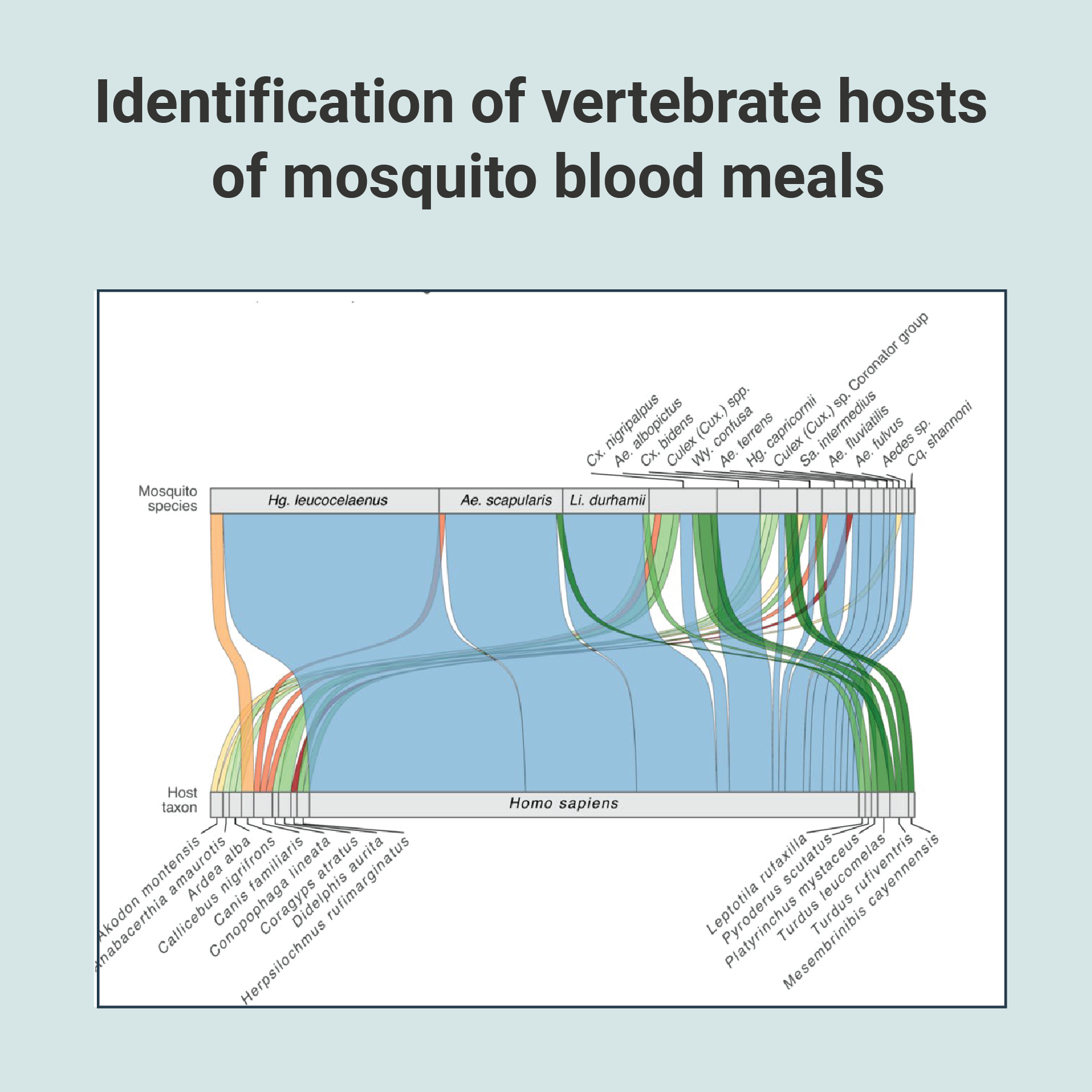
Vertebrate hosts of mosquito blood meals following the yellow fever outbreak in São Paulo
Nanopore sequencing of blood-engorged forest mosquitoes in São Paulo’s Serra da Cantareira parks following the 2017–2018 yellow fever outbreak reveals that humans accounted for 76.6% of vertebrate blood meals—including in primary sylvatic vectors Haemagogus leucocelaenus and Hg. capricornii—highlighting persistent urban spillover risk.
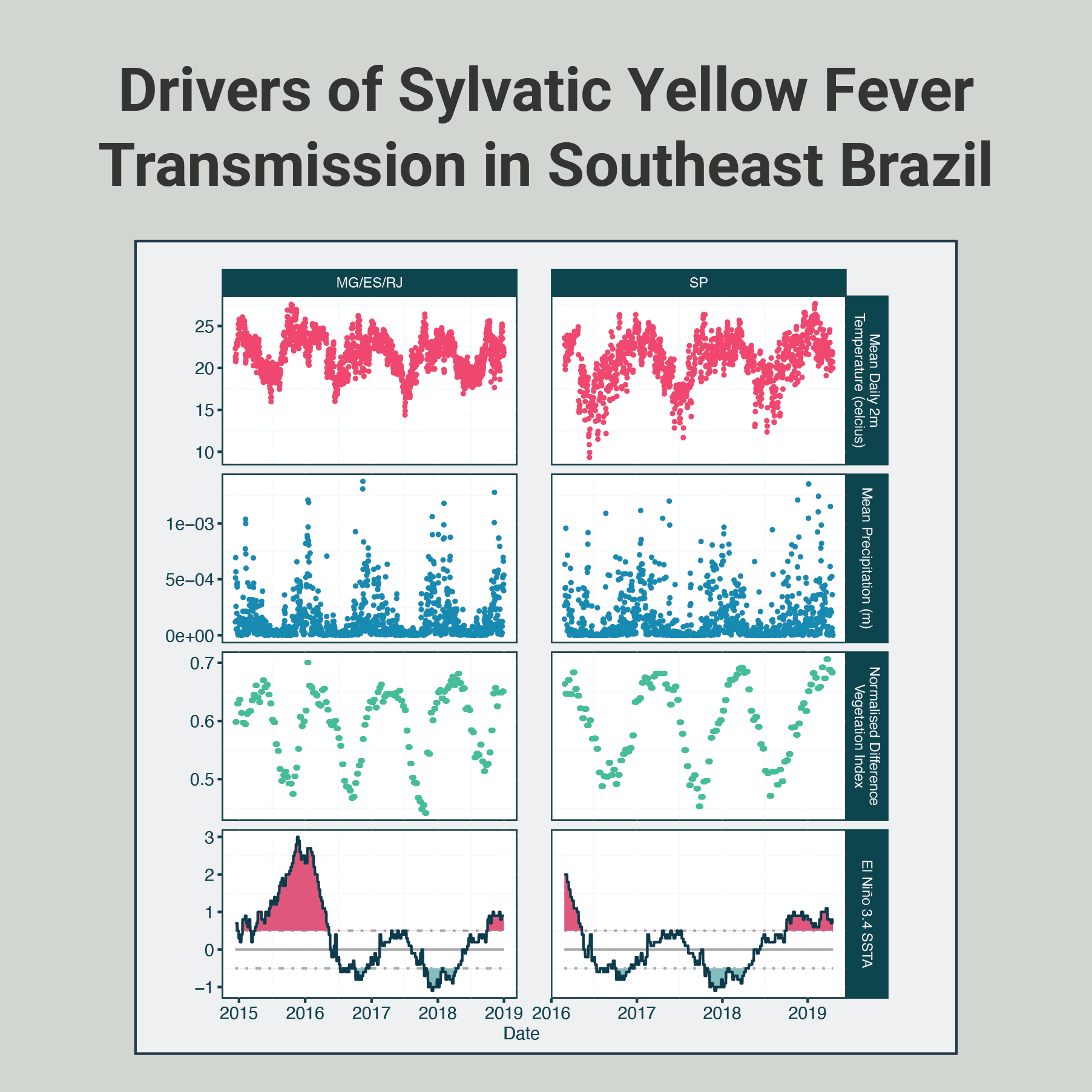
Drivers of sylvatic yellow fever transmission in southeast Brazil
Joint epidemiological and phylodynamic inference (EpiFusion) across southeast Brazil reveals that sylvatic yellow fever in non-human primates hovers near a critical tipping point (Rt≈1.0), with medium- and long-term El Niño temperature anomalies driving epizootics and subsequent human spillover.

Zoonotic yellow fever in São Paulo, Brazil
A single yellow fever introduction at São Paulo's forest edge wiped out the local howler monkey population in 46 days, with R₀ near 8.2

Oropouche transmission dynamics in Latin America
Once confined to the Amazon, Oropouche virus is now spreading across South American and Caribbean cities — and surveillance built for dengue and Zika is missing it