

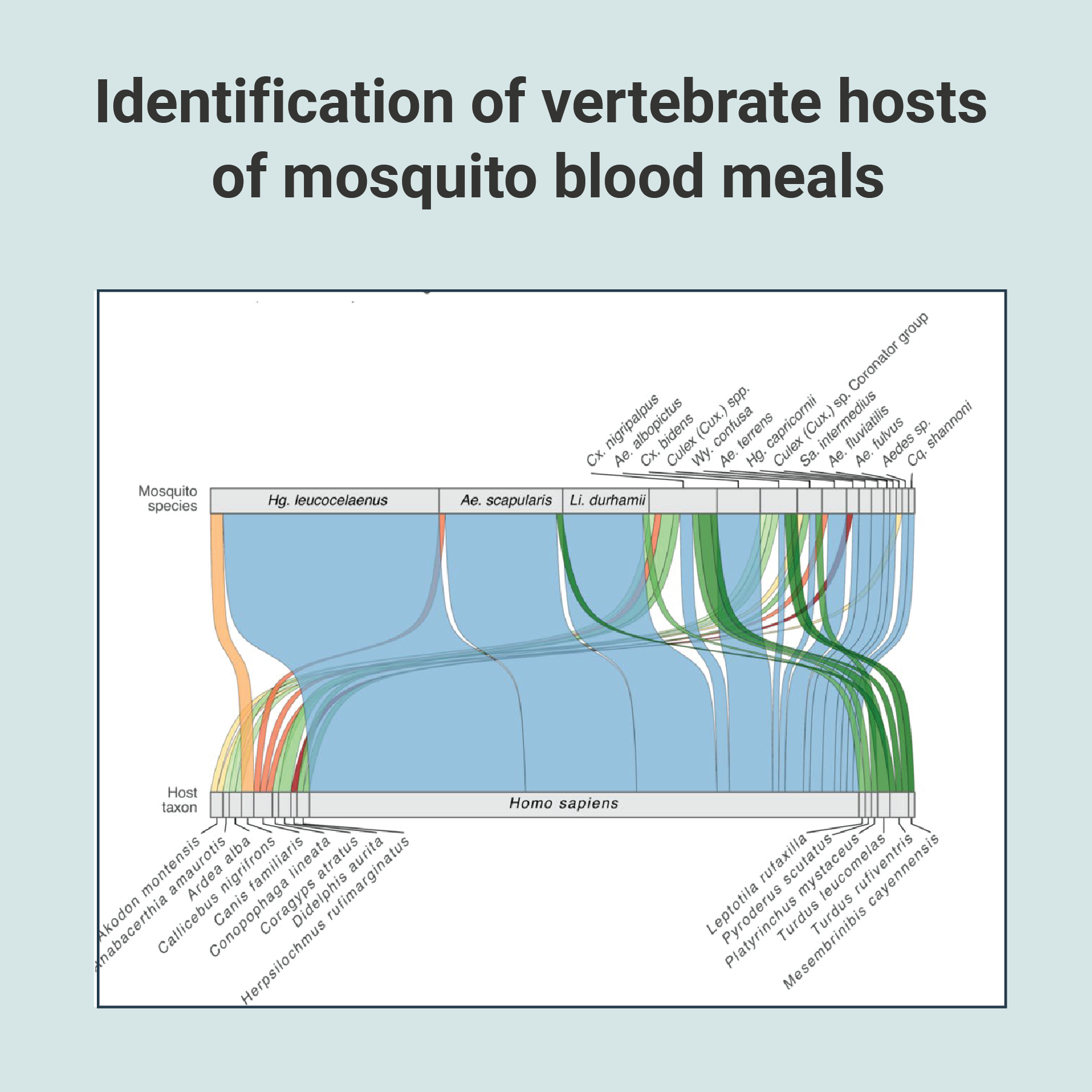
Vertebrate hosts of mosquito blood meals following the yellow fever outbreak in São Paulo
Nanopore sequencing of blood-engorged forest mosquitoes in São Paulo’s Serra da Cantareira parks following the 2017–2018 yellow fever outbreak reveals that humans accounted for 76.6% of vertebrate blood meals—including in primary sylvatic vectors Haemagogus leucocelaenus and Hg. capricornii—highlighting persistent urban spillover risk.
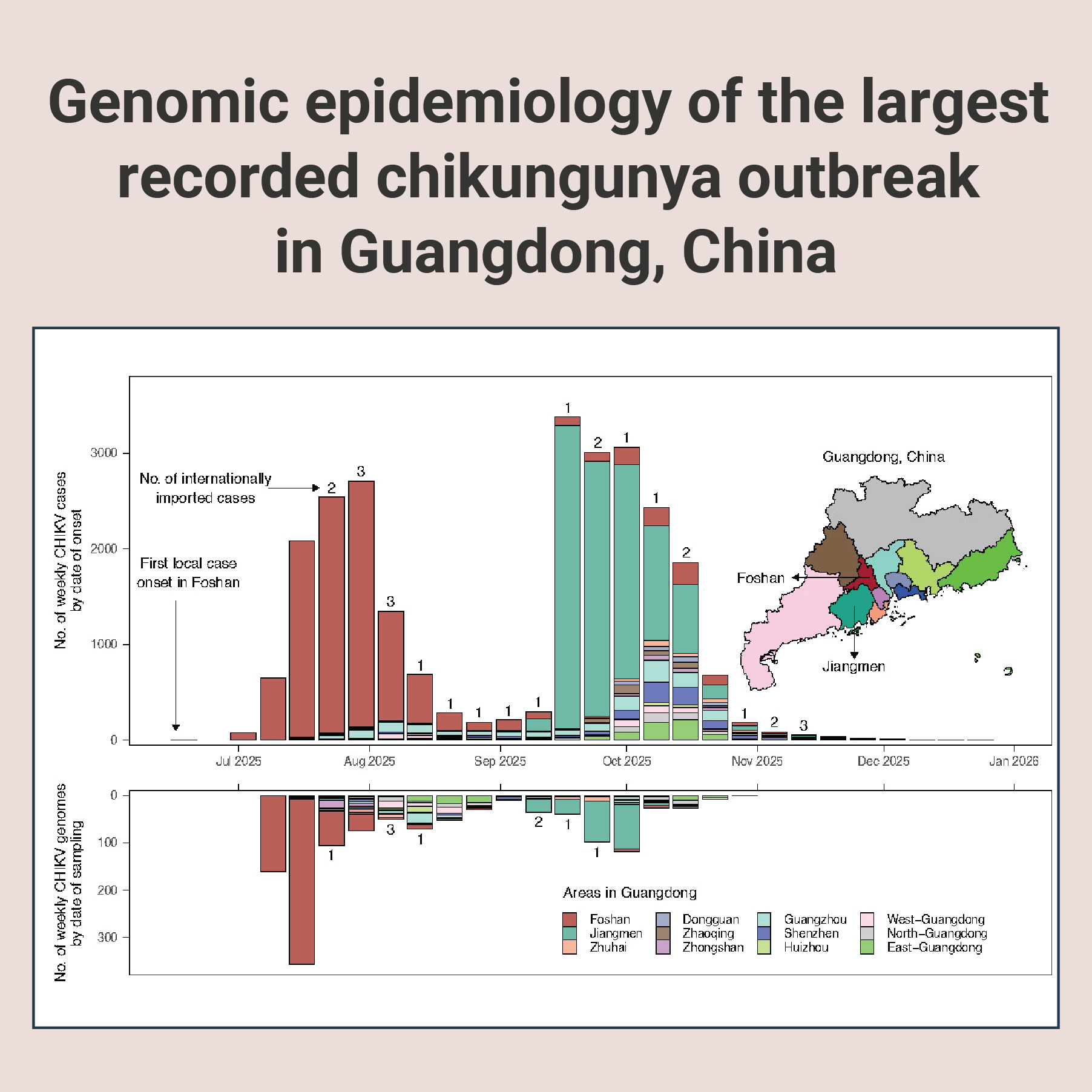
Genomic epidemiology of chikungunya virus in Guangdong, China
Sequencing 1,264 chikungunya virus genomes from the 2025 Guangdong outbreak (>25,000 confirmed cases) traces the epidemic to a single Reunion-associated ECSA lineage introduction in late April–early May 2025 and reveals contrasting spatial dispersal between the Foshan and Jiangmen epidemic waves.
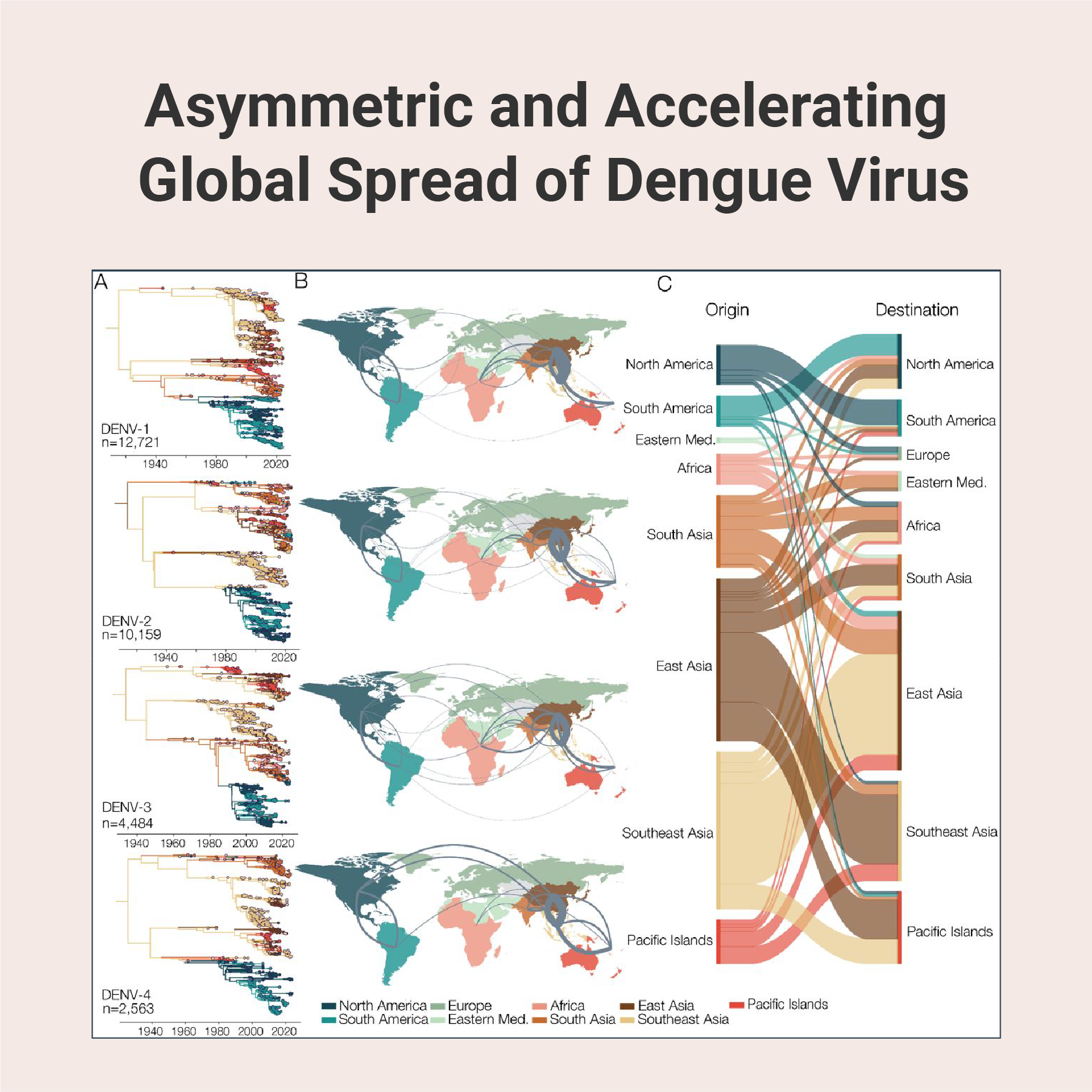
Symmetric and accelerating global spread of dengue virus
Phylogeographic analysis of global dengue virus genomes from the 1940s to the present reveals that modern urban DENV diversity originated in Asia and spreads asymmetrically into the Americas and Africa—entering primarily via North America and the Caribbean through northern-hemisphere seasonal synchrony and accelerating sharply post-2010 with rising global air travel.
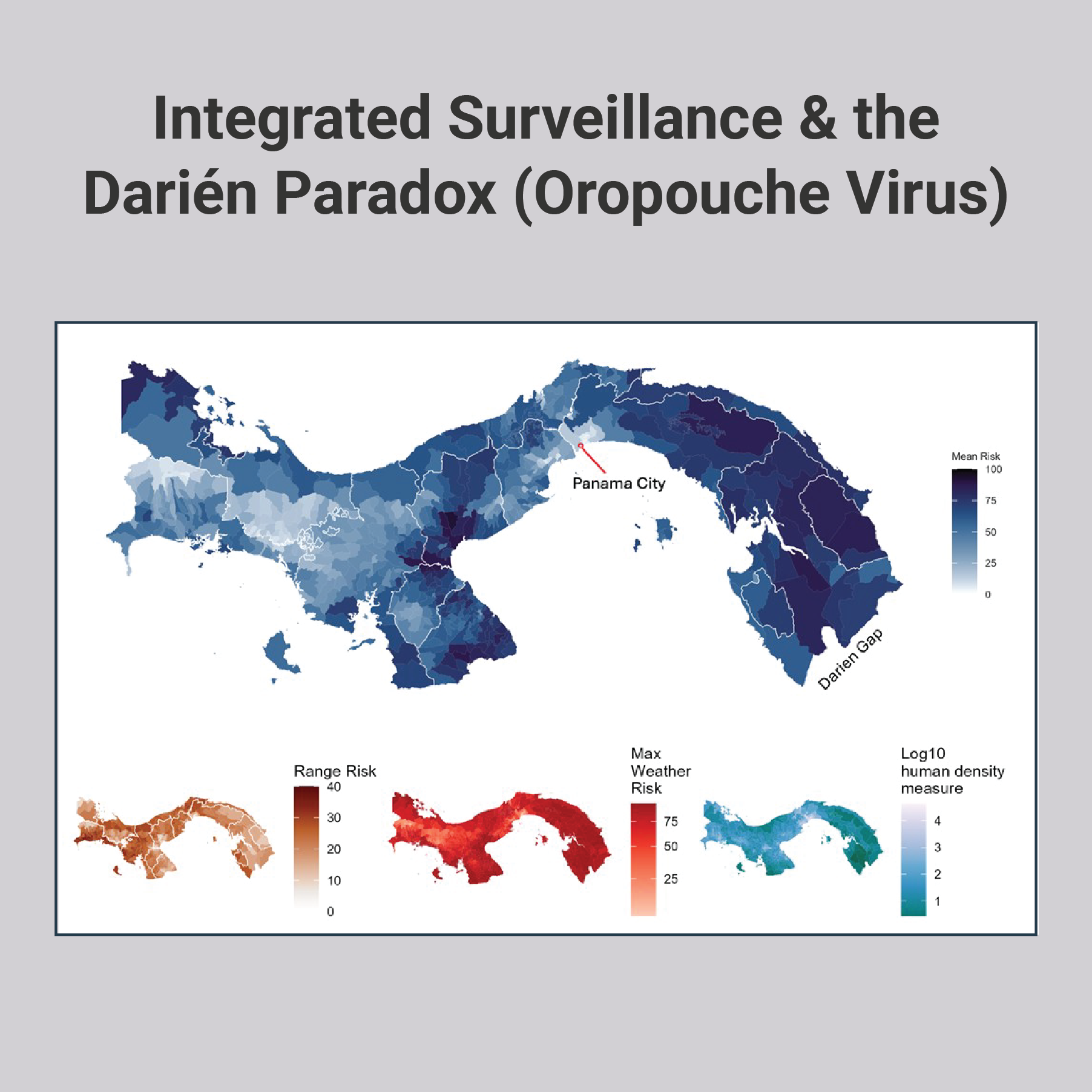
Integrated surveillance resolves the Darién paradox of Oropouche virus emergence in Panama
Integrated clinical, genomic, and climate surveillance of 1,040 patients in Panama’s Darién migration corridor reveals a 43% Oropouche virus positivity rate, a 56% household secondary attack rate, and a single October 2024 introduction with broad susceptibility across Central America.
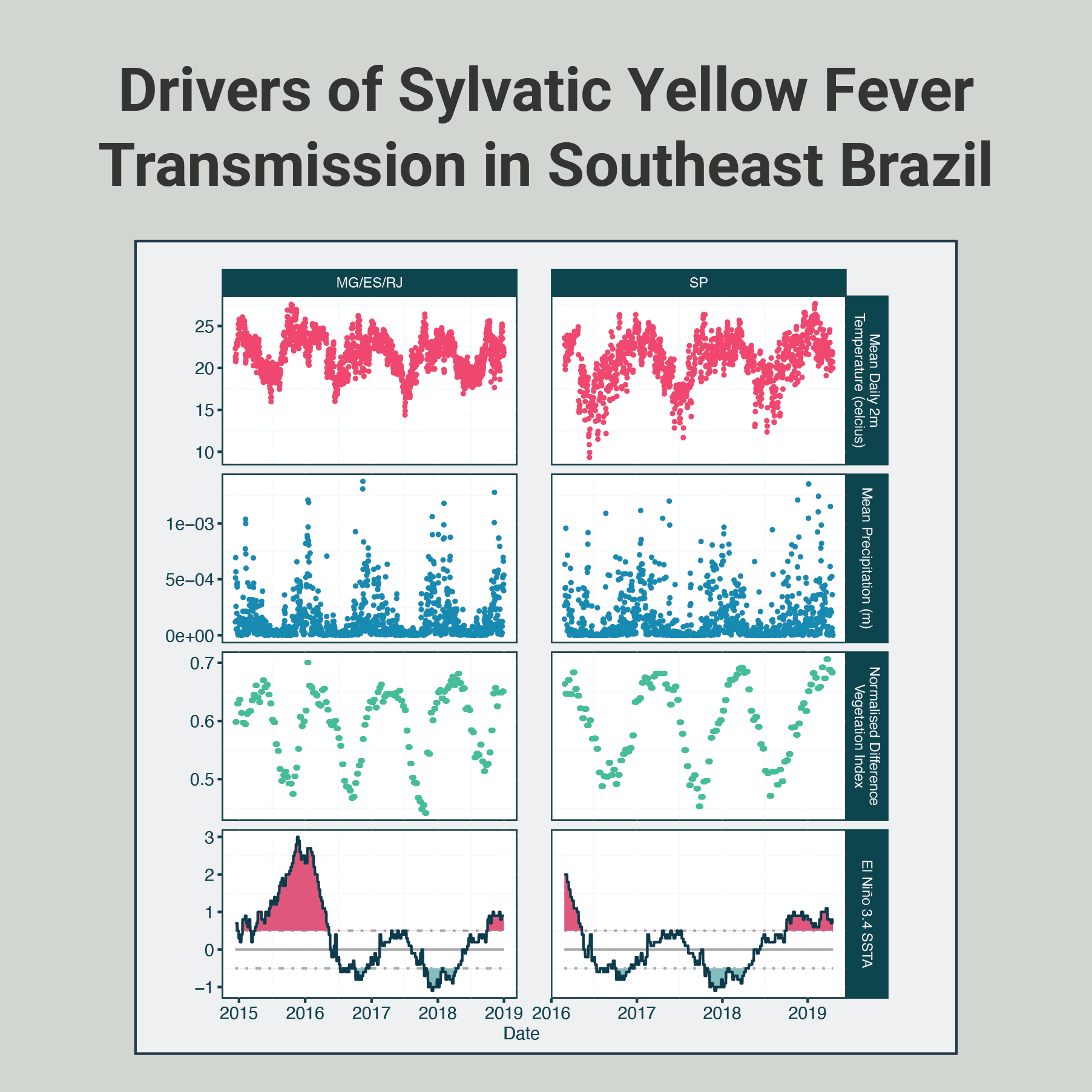
Drivers of sylvatic yellow fever transmission in southeast Brazil
Joint epidemiological and phylodynamic inference (EpiFusion) across southeast Brazil reveals that sylvatic yellow fever in non-human primates hovers near a critical tipping point (Rt≈1.0), with medium- and long-term El Niño temperature anomalies driving epizootics and subsequent human spillover.
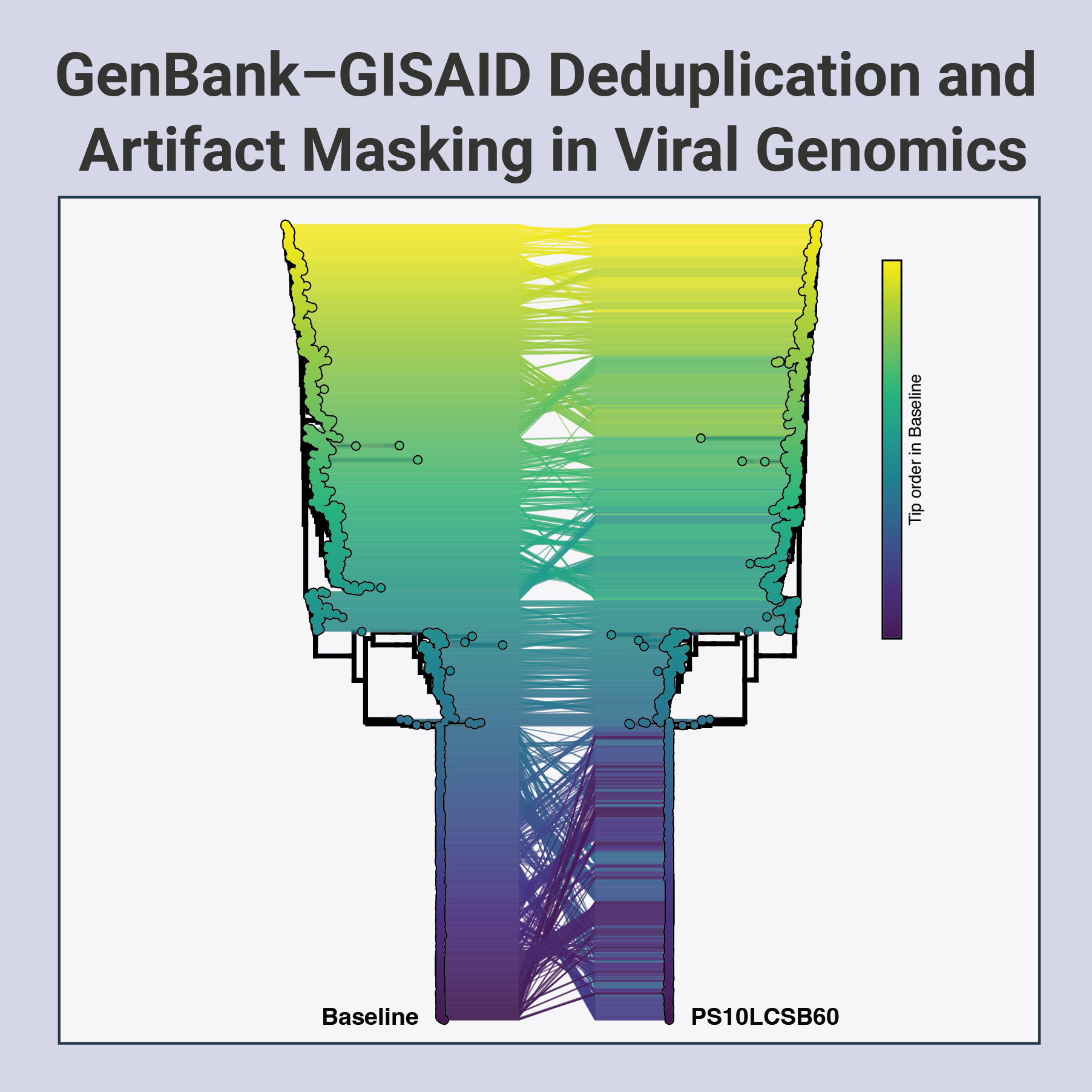
GenBank–GISAID Deduplication and Artifact Masking in Viral Genomics
Integrating viral genomes across GenBank and GISAID is hindered by unlinked duplicate records and lab-specific sequencing errors. Two new open-source tools—G2G matcher and LSBFILT—automate cross-database deduplication and artifact masking, nearly doubling molecular clock signal (R2 from 0.35 to 0.68) in chikungunya virus phylogenies.

Oropouche virus TAG-VE review
Review summarising critical knowledge gaps and outlining priorities for Oropouche virus epidemiology and research.

Zoonotic yellow fever in São Paulo, Brazil
A single yellow fever introduction at São Paulo's forest edge wiped out the local howler monkey population in 46 days, with R₀ near 8.2

Hidden serotype patterns in primary dengue infections
Inapparent versus symptomatic primary dengue virus infections

Oropouche transmission dynamics in Latin America
Once confined to the Amazon, Oropouche virus is now spreading across South American and Caribbean cities — and surveillance built for dengue and Zika is missing it

Climate and land use shape Oropouche outbreaks across Brazil
Ecological and demographic drivers of Oropouche virus transmission

Lessons from Lisbon's 1857 yellow fever epidemic
Spatial and social determinants of the 1857 yellow fever epidemic in Lisbon

SERAPHIM 2.0: new tools for tracking pathogen spread
Studying phylogenetically informed movements with Seraphim 2.0

Real‑time AI nowcasting for dengue in São Paulo
Fast and trustworthy nowcasting of dengue fever: A case study using attention-based probabilistic neural networks in São Paulo, Brazil

What we know — and don't — about Zika, ten years on
A decade after the emergency, the first systematic review of Zika epidemiology finds congenital syndromes in roughly 1 in 22 affected pregnancies and symptoms in just half of infections

Nonlinear methods for linking climate to viral spread
Nonlinear methods for linking climate to viral spread

DENV-2 in Madeira's mosquitoes
Dengue has returned to Madeira, with the same virus found in both mosquitoes and a local patient — during the off-season, when transmission should have been least likely

Mapping Oropouche seroprevalence across the Americas
Serological and viral prevalence of Oropouche virus (OROV): A systematic review and meta-analysis from 2000–2024 including human, animal, and vector surveillance studies

Tracking the arrival of DENV3 in Angola
Dengue had been quietly circulating in Angola for two years before it was spotted, traced by genomic analysis to a single 2022 import likely from the Americas

DENV3–OROV co-infection in Portugal
Europe's first reported dengue–Oropouche co-infection was caught not by targeted PCR but by broader genomic sequencing, in a case linked to recent travel from Cuba