


DeZi Network at the PanArboNet Meeting 2027
The DeZi Network team will be presenting at the Pan-American Arbovirus Research Network (PanArboNet / Pan-Dengue Net) Meeting 2027 at the Centro de Convenções Rebouças in São Paulo, Brazil (19–22 April 2027). Abstract submissions close on 17 November 2026.
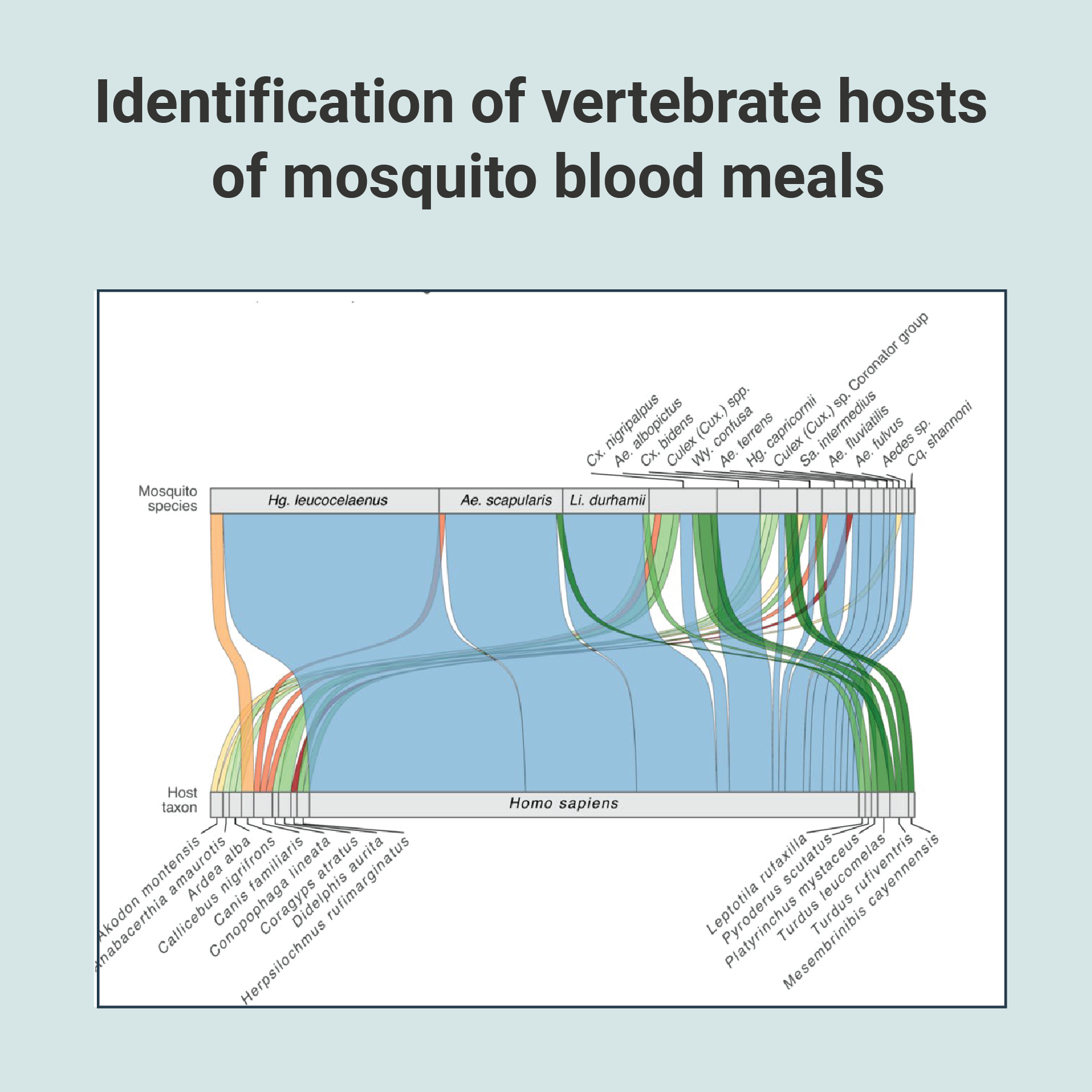
Vertebrate hosts of mosquito blood meals following the yellow fever outbreak in São Paulo
Nanopore sequencing of blood-engorged forest mosquitoes in São Paulo’s Serra da Cantareira parks following the 2017–2018 yellow fever outbreak reveals that humans accounted for 76.6% of vertebrate blood meals—including in primary sylvatic vectors Haemagogus leucocelaenus and Hg. capricornii—highlighting persistent urban spillover risk.
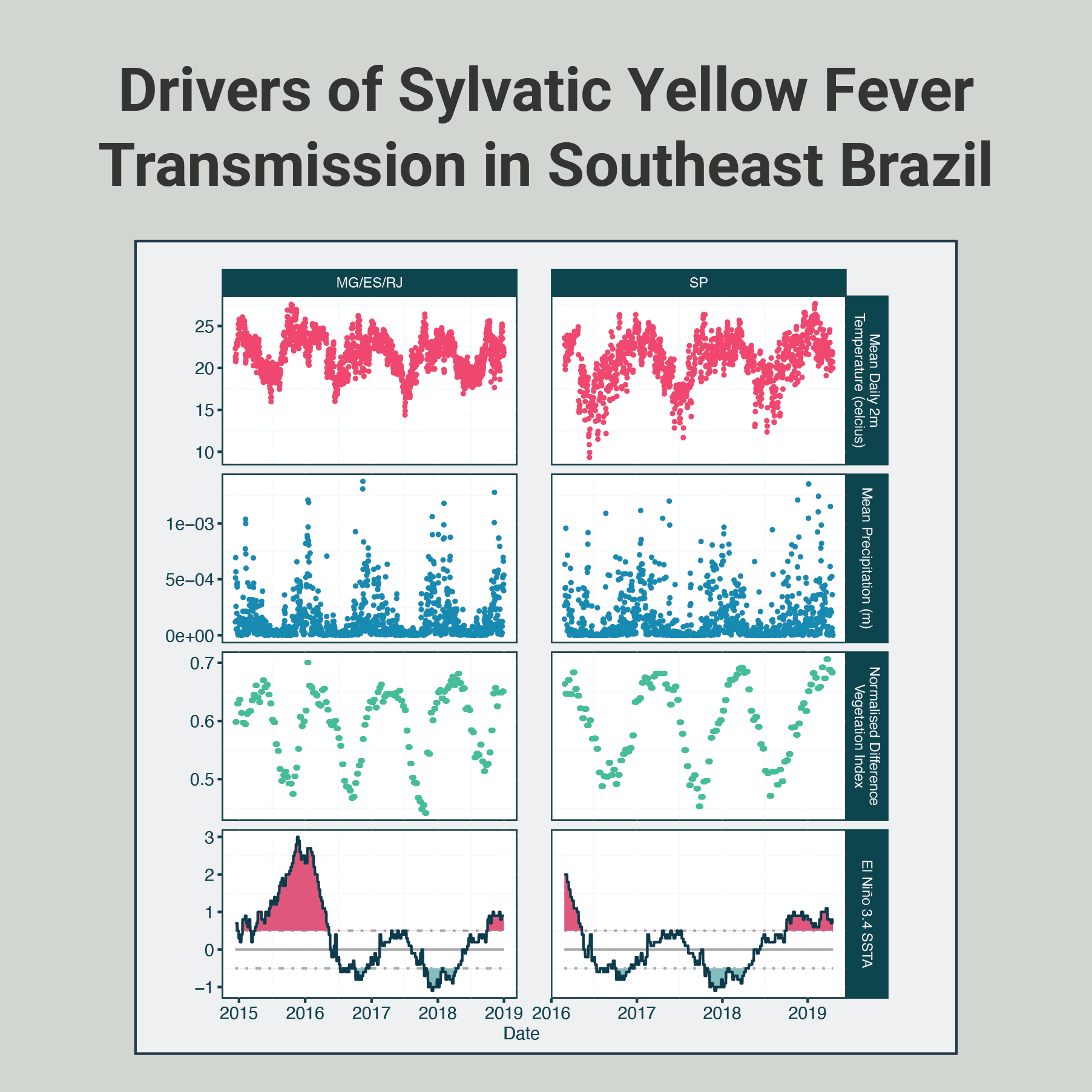
Drivers of sylvatic yellow fever transmission in southeast Brazil
Joint epidemiological and phylodynamic inference (EpiFusion) across southeast Brazil reveals that sylvatic yellow fever in non-human primates hovers near a critical tipping point (Rt≈1.0), with medium- and long-term El Niño temperature anomalies driving epizootics and subsequent human spillover.

Zoonotic yellow fever in São Paulo, Brazil
A single yellow fever introduction at São Paulo's forest edge wiped out the local howler monkey population in 46 days, with R₀ near 8.2

Lessons from Lisbon's 1857 yellow fever epidemic
Spatial and social determinants of the 1857 yellow fever epidemic in Lisbon